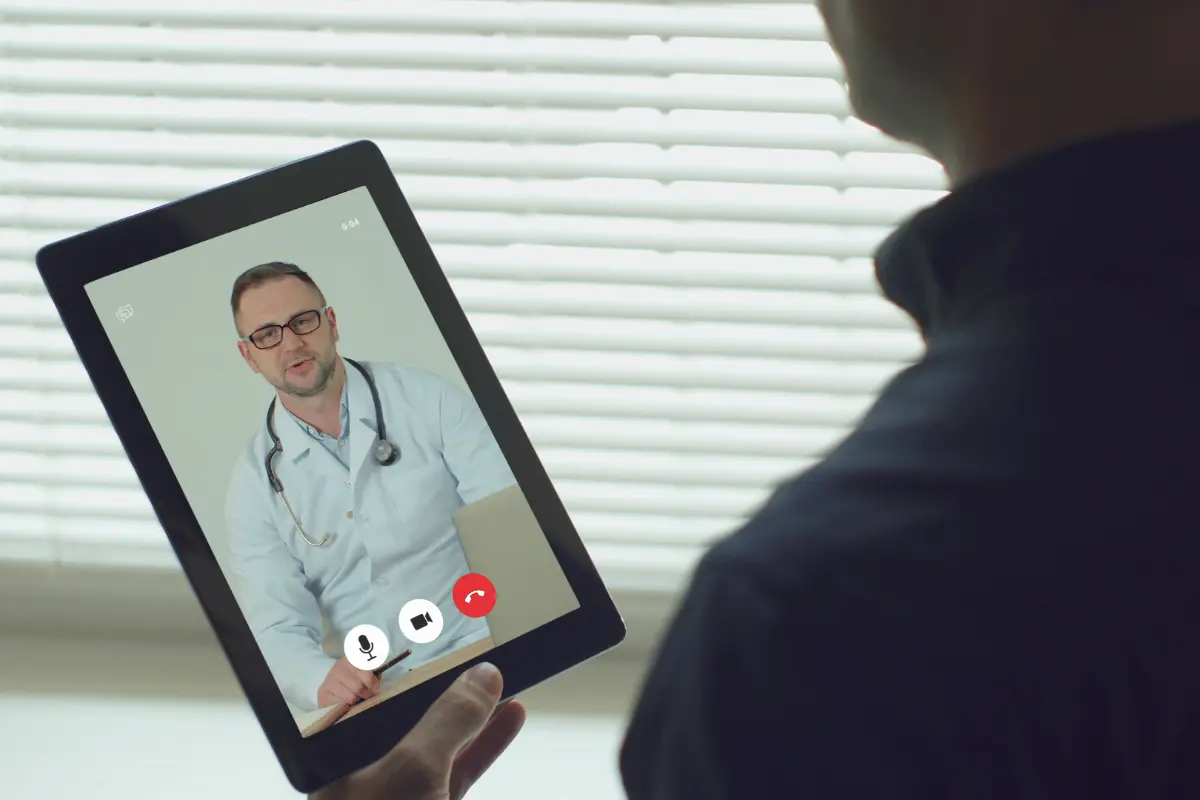
You’ve got a sore throat on a Tuesday night, so you open a telehealth app, talk to whoever’s on call, and get a prescription in 15 minutes. That’s telehealth doing exactly what it’s good at. But it’s a different thing from having a doctor who knows your history, tracks your bloodwork over the years, and picks up the phone when you’re worried.
That’s the real distinction in concierge medicine vs. telehealth, and it gets muddied because the two overlap. Plenty of concierge practices, this one included, use telehealth every day. So the honest question isn’t which one wins. It’s a question of what each is actually for, and where a standalone telehealth app quietly falls short.
Concierge Medicine vs. Standalone Telehealth: Side by Side
| Concierge Medicine | Standalone Telehealth App | |
|---|---|---|
| Who you see | Your physician, who knows you | Whoever is on call |
| Continuity | Ongoing relationship and record | One-off, per visit |
| Best for | Complex, chronic, or preventive care | Acute, simple, one-time issues |
| Access to your history | Full: labs, trends, past visits | Only what you report that day |
| Includes telehealth? | Yes, plus in-person and direct access | Video or phone only |
| Cost model | Membership fee | Per-visit or low subscription |
| Proactive monitoring | Built in | None |
Notice the last row of the “includes telehealth” line. That’s the point most comparisons miss. Concierge medicine doesn’t compete with telehealth. It absorbs it, and adds the relationship a standalone app can’t.
What Telehealth Actually Is
Telehealth is a way of delivering care, not a type of care. It’s the video call, the phone consult, the secure message. Standalone telehealth apps like the big-name platforms connect you quickly, usually within hours, to whichever physician, nurse practitioner, or PA is available at that moment.
For a specific, one-time problem, that’s genuinely useful. A telehealth app is a good tool when you have:
- An acute, simple issue: a UTI, pink eye, a sinus infection, poison ivy
- A prescription refill you need while traveling
- A quick question that doesn’t need a physical exam
What you usually don’t get is continuity. The clinician who sees you tonight probably won’t be the one who sees you next time, and they’re working from whatever you tell them in the moment, not from a record of your health. For the sore throat, that’s fine. For anything that unfolds over time, it’s a real limitation.

What Concierge Medicine Actually Is
Concierge medicine is a relationship, not a transaction. You pay a membership fee, the practice keeps its patient panel small, and in exchange you get a physician who knows you, more time in each visit, and direct access when you need it. If you want the full breakdown of how the model works, our guide to concierge health care in West Palm Beach covers the fees, the access, and how it fits alongside your insurance.
Telehealth is part of that, not the opposite of it. At our West Palm Beach practice, a good share of care happens by phone or video when an in-person visit isn’t necessary. The difference from a telehealth app is who’s on the other end: the same physician who ordered your labs, tracked your numbers, and remembers what you were dealing with six months ago. The video visit is one channel into an ongoing relationship, not a one-off encounter with a stranger.
That continuity is what makes proactive care possible. A doctor who knows your baseline can spot a trend you’d never think to flag. This is the foundation of real longevity and preventive care, which depends entirely on someone tracking your health over time rather than reacting to isolated complaints.
Transactional vs. Relational: The Core Difference
Strip away the jargon and it comes down to one thing. Telehealth apps are transactional. Concierge medicine is relational. Both have a place, and knowing which you need for a given problem saves you money and frustration.
Transactional care is efficient for discrete, self-contained problems. You have a symptom, you get it addressed, you move on. No relationship required, and paying for one would be overkill.
Relational care is what handles complexity over time: managing a chronic condition, optimizing hormones, coordinating specialists, and catching the slow-moving problems that never announce themselves in a single visit. A telehealth app can treat the symptom you came in with. It can’t catch the trend you didn’t know to ask about, because it isn’t watching for one.
Here’s the practical test. If you can name the problem and it’s likely a one-time fix, a telehealth app is often the right, cheap tool. If the problem is ongoing, connected to your broader health, or something you’d want the same doctor managing over months, that’s relational territory.
Where This Matters Most: Ongoing Men’s Health
For the problems men most often put off, the difference is not academic. Take testosterone. A telehealth app might write a prescription after a single questionnaire, but hormone therapy done right requires baseline labs, follow-up bloodwork, dose adjustments, and monitoring over time. That’s relational care by definition, which is why proper low testosterone treatment is delivered as part of an ongoing relationship, not a one-time video call.
The same holds for weight management, cardiovascular risk, and the general project of aging well. These aren’t single-visit problems. They’re managed over months and years by someone who knows your numbers. A telehealth app is a screwdriver: perfect for one specific job. Concierge medicine is the physician who owns the whole toolbox and knows which tool your situation actually needs.
Frequently Asked Questions
Is concierge medicine the same as telehealth?
No. Telehealth is a method of delivering care by phone or video. Concierge medicine is a membership model built around a small patient panel and an ongoing relationship with your physician. Most concierge practices use telehealth as one channel of care, so it’s a feature of the model, not a competitor to it.
When should I use a telehealth app instead of my doctor?
For acute, simple, one-time problems where continuity doesn’t matter: a UTI, pink eye, a sinus infection, or a refill while you’re traveling. These are efficient to handle through a standalone app. Anything ongoing, complex, or tied to your broader health is better managed by a physician who knows you.
Does concierge medicine include virtual visits?
Usually, yes. Much of concierge care can happen by phone or video when an in-person exam isn’t needed. The difference from a standalone app is that the virtual visit is with your own physician, who has full access to your history and labs.
Is telehealth cheaper than concierge medicine?
Per visit, yes. A standalone telehealth app has a low or per-use cost, which makes sense for occasional acute problems. Concierge medicine costs more because you’re paying for an ongoing relationship and proactive care, not a single transaction. Which is “worth it” depends on whether your needs are one-off or continuous.
Can I get testosterone or weight-loss treatment through telehealth?
You can start a conversation that way, and legitimate care often uses virtual visits. But responsible hormone or weight treatment requires baseline labs, monitoring, and dose adjustments over time. That’s an ongoing relationship, which is why it should be managed by a physician who follows your case, not prescribed off a single questionnaire.
If you want care that uses telehealth for convenience but is anchored by a physician who actually knows you, that’s what a concierge practice is built for. Book a consultation at our Palm Beach County office to talk it through.
This article is for educational purposes and is not a substitute for medical advice. Talk to a physician before starting or changing any treatment.